the future of a/b testing.

brand
evolv ai
industry
artificial intelligence
year
2022

As Lead Designer for Evolv AI, I worked at the intersection of product design, experimentation, and AI-driven optimization. I led design initiatives across client projects, identifying opportunities to improve user experiences and translating those opportunities into testable design hypotheses.
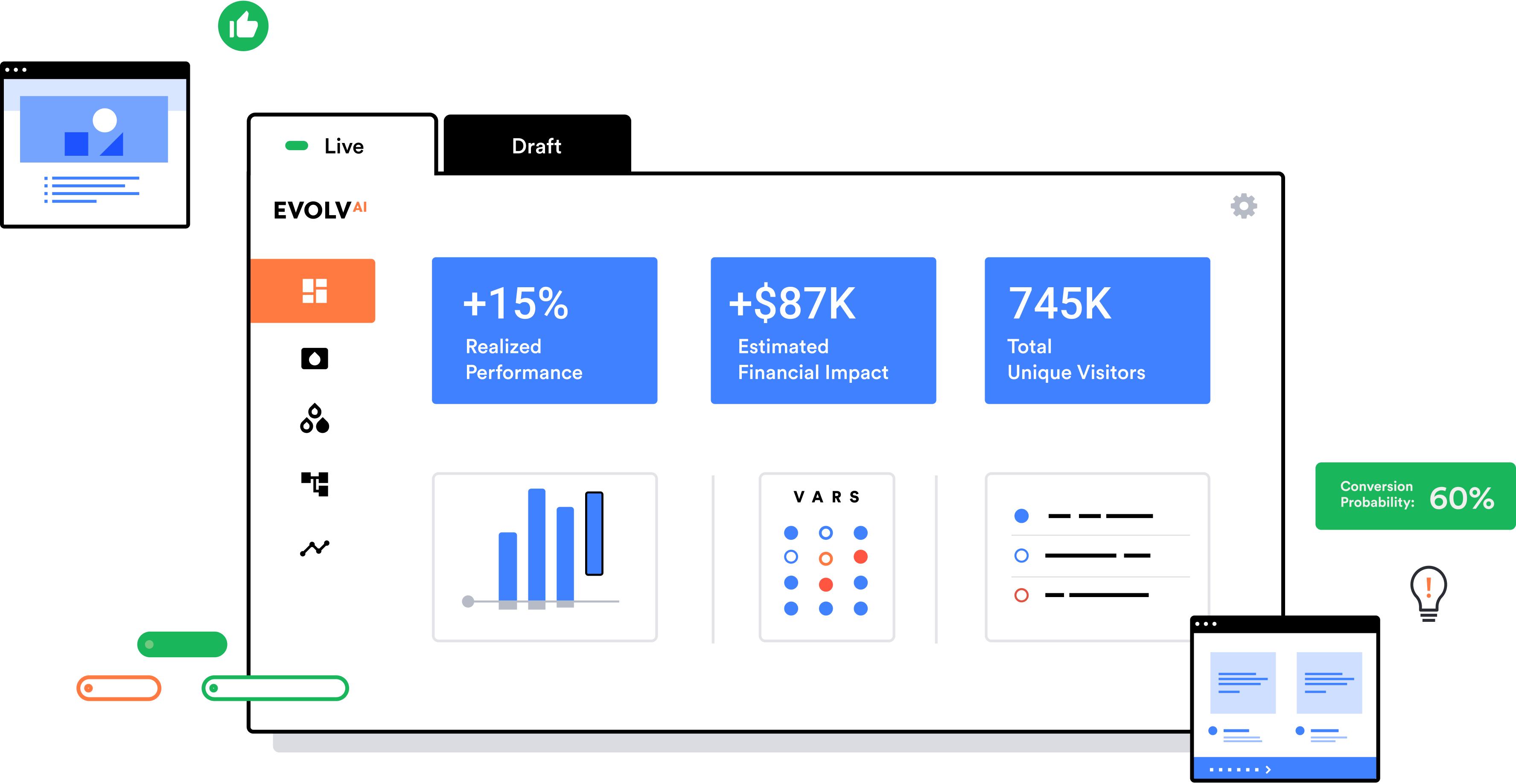
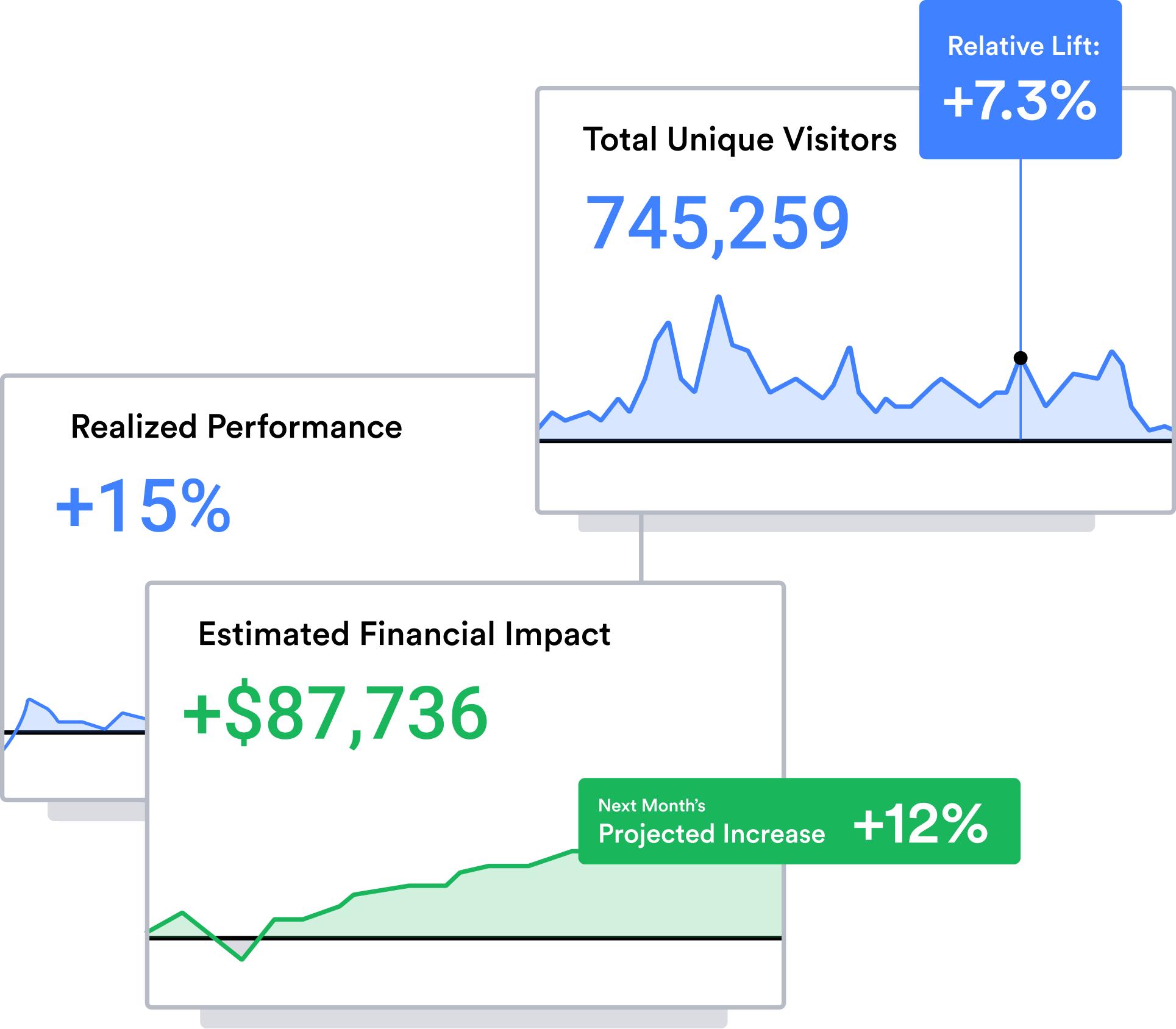
The platform enabled multiple design variations to be evaluated against the existing website experience, using real-world performance data to inform which combinations worked best for different audiences. This created a continuous feedback loop between human design expertise and AI-driven experimentation, allowing design decisions to evolve through extensive data-based evidence rather than human analysis and intuition alone.

01.
the human-ai synergy.
I led the design process from UX strategy and hypothesis development through to high-fidelity design in Figma. For each project, I assessed the existing experience, identified opportunities for improvement, and developed design variations around specific user needs and business objectives.
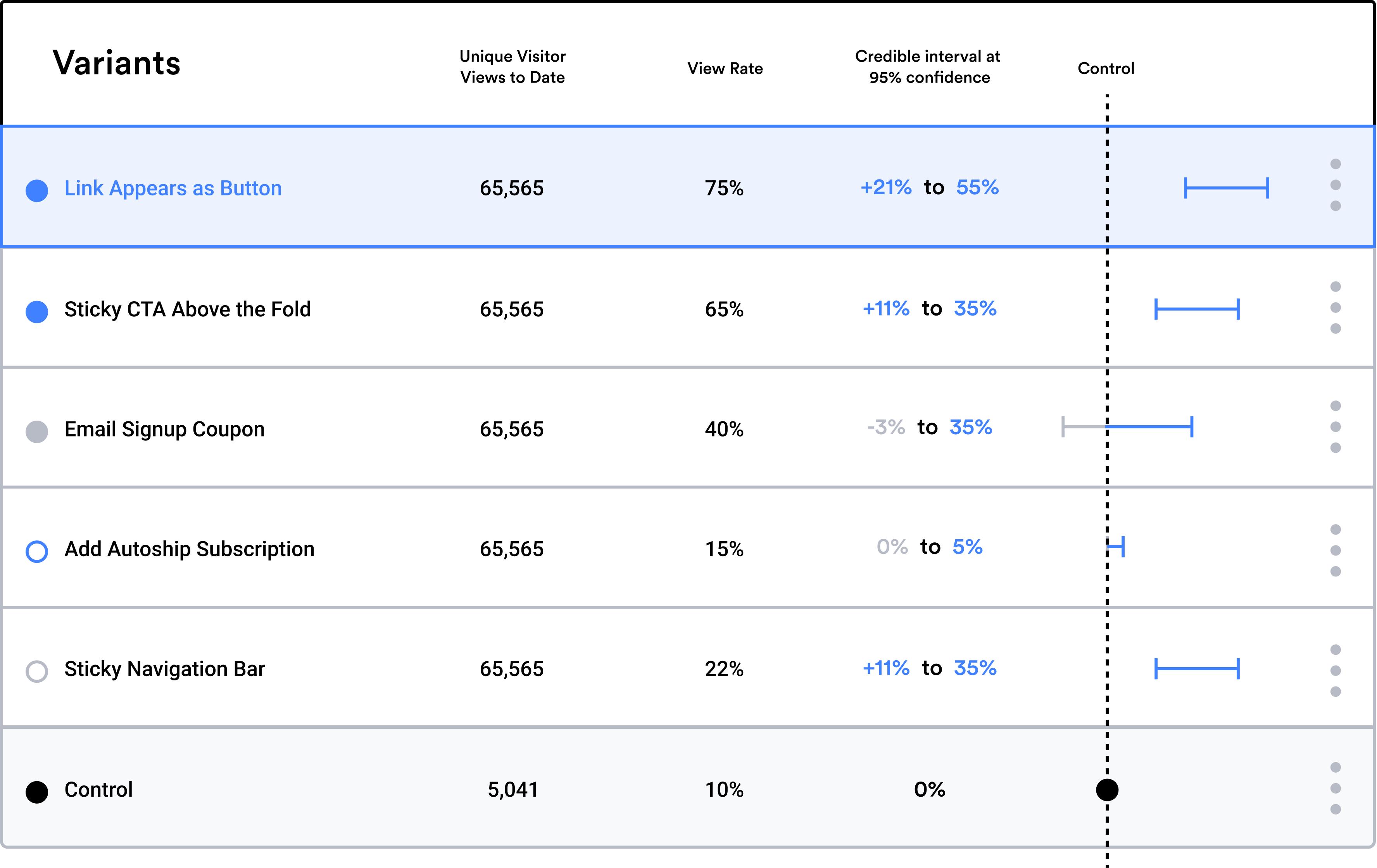
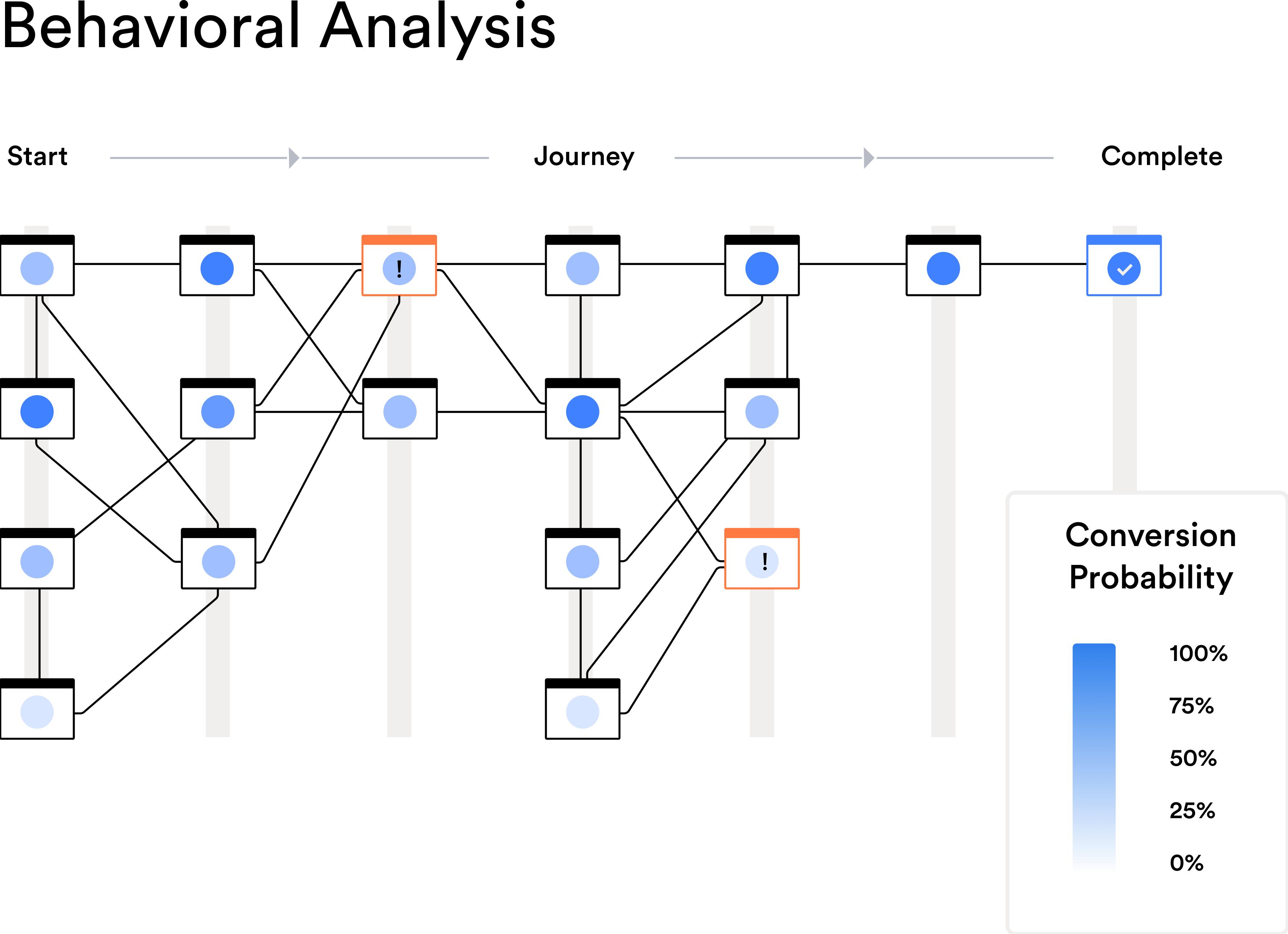
These variations were then introduced into Evolv AI, where the platform evaluated their performance against a control experience and analyzed results across different user segments. Rather than relying on a single redesign, the system could test combinations of successful design elements to identify stronger-performing experiences.
My role was to bring design judgment to this process: framing meaningful hypotheses, translating insights into design solutions, and interpreting performance findings to guide the next iteration. The result was a collaborative approach in which human expertise established the direction, while AI-powered experimentation helped determine which solutions performed best.
the future of a/b testing.

brand
evolv ai
industry
artificial intelligence
year
2022

As Lead Designer for Evolv AI, I worked at the intersection of product design, experimentation, and AI-driven optimization. I led design initiatives across client projects, identifying opportunities to improve user experiences and translating those opportunities into testable design hypotheses.
The platform enabled multiple design variations to be evaluated against the existing website experience, using real-world performance data to inform which combinations worked best for different audiences. This created a continuous feedback loop between human design expertise and AI-driven experimentation, allowing design decisions to evolve through extensive data-based evidence rather than human analysis and intuition alone.

01.
the human-ai synergy.
I led the design process from UX strategy and hypothesis development through to high-fidelity design in Figma. For each project, I assessed the existing experience, identified opportunities for improvement, and developed design variations around specific user needs and business objectives.
These variations were then introduced into Evolv AI, where the platform evaluated their performance against a control experience and analyzed results across different user segments. Rather than relying on a single redesign, the system could test combinations of successful design elements to identify stronger-performing experiences.
My role was to bring design judgment to this process: framing meaningful hypotheses, translating insights into design solutions, and interpreting performance findings to guide the next iteration. The result was a collaborative approach in which human expertise established the direction, while AI-powered experimentation helped determine which solutions performed best.